You can also pay with Apple Pay or Google Pay
You can also pay with Apple Pay or Google Pay
You can also pay with Apple Pay or Google Pay
You can also pay with Apple Pay or Google Pay
The anemone is a flower with ancient roots, taking its name from the Greek word “anemos”, meaning “wind”.
Its common name, “windflower”, suits it perfectly, as its delicate petals seem to dance at the slightest breeze. It belongs to the Ranunculaceae family and is found across many regions of the world, from Europe to Asia and North America.
In ancient times these flowers were considered symbols of hope and rebirth, often associated with spring and with the renewal of nature after the cold winter months.

The first evidence of anemones being cultivated dates back several centuries, to a time when gardeners in the Mediterranean and the East were experimenting with wild varieties in order to obtain petals in ever more varied shades.
Thanks to their beauty and freshness, anemones quickly won over royal courts and the great botanical gardens, and from there they spread gradually across the whole of Europe.
Today they come in countless varieties, from single petals in pastel shades to double or even multiple petals in intense reds, purples and pure white.
Wild anemones can be spotted in meadows, in woodland and in hilly areas, usually in spring, between March and May, depending on the climate and the altitude. They prefer partly shaded spots, with well-drained soil that is rich enough in nutrients. In some regions they flower even into early summer, if temperatures stay moderate.
In the wild, anemones benefit from the moisture of damp soil and from regular rainfall, without excessive heat or long dry spells. Their display is short-lived but extremely intense. Many people regard them as a sign of true spring, being the first flowers to appear once the snow has melted. Seeing them in their natural habitat can be a special experience, one that reminds you of the delicate beauty of wild flora.
On the cut flower market, anemones are most often available between October and May, peaking in popularity in early spring. Thanks to modern greenhouse growing techniques, however, hybrid varieties can sometimes be found almost all year round. In flower shops, anemones are valued for lasting relatively well when they are cared for properly. Their petals stay fresh for several days and the colour remains intense, especially if they are bought in bud and given the right conditions.
In general, the price per stem varies with the season and with the rarity of the variety. At peak times, when demand is high, the cost can rise, while in periods of low supply anemones become an exotic choice, prized by anyone looking for a touch of originality in their arrangements.
In flower shops these blooms are often sold both by the stem and in bunches, or combined with other flowers to create varied, sophisticated bouquets.
Anemones are extremely versatile and can easily be worked into romantic bouquets, rustic arrangements or modern, minimalist compositions. Thanks to their fine petals, they sit harmoniously alongside flowers such as tulips, ranunculus, freesias or decorative eucalyptus.

A classic bouquet might combine white anemones with sprigs of greenery and pastel blooms, for a delicate effect. For events with a vibrant theme, you can choose red or deep purple anemones alongside fern fronds or dark decorative foliage, creating a bold contrast.
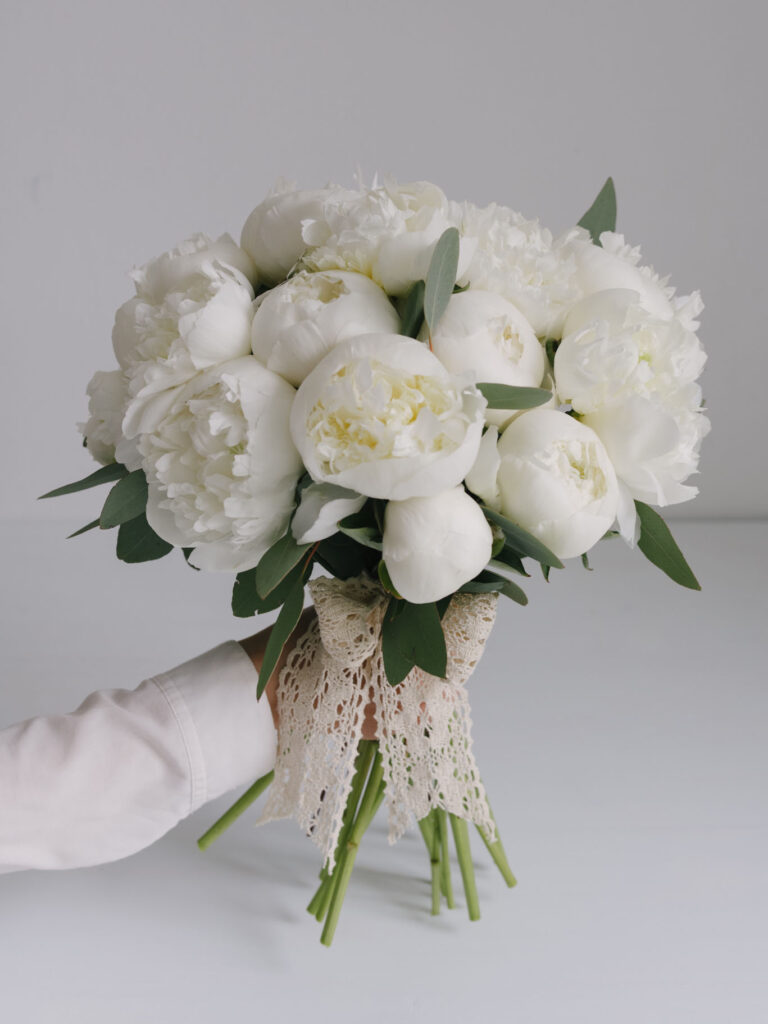
When it comes to weddings, anemones are often the flower of choice for the bridal bouquet, particularly when the aim is an airy, natural and elegant look.
Another advantage is that they also work as the centrepiece of a simple vase, to decorate a table. In indoor arrangements it is best to place them in clear glass containers, so that the slender stems show and the beauty of the whole plant stands out.
Anemones are relatively easy to look after as cut flowers, provided they are given the attention they need. The first step is to cut the stems at an angle, about two or three centimetres from the base, using a well-sharpened knife or a proper pair of florist’s scissors. The water in the vase should be clean, changed every two days and kept cool, ideally between 5 and 8 degrees Celsius in the space where the flowers are stored before being displayed.
If you cannot keep them at such low temperatures, it is best to move them overnight into the coolest room you have, below 18 degrees Celsius.
Any leaves on the stem that end up in the water should be removed, to prevent bacteria from developing. It is also worth using flower food (one of those little sachets), which contains nutrients and a bactericide. That way the petals keep their freshness and the brightness of their colour for longer.
In the garden, anemones prefer spots with filtered light or partial shade and a humus-rich, well-drained soil. If the ground is compacted, it helps to add compost or sand to improve aeration and drainage. The tubers are usually planted in autumn, so the roots have time to develop before winter arrives. In early spring you will see the first leaves appear, soon followed by buds.
Replanting is usually done every two or three years, especially if you notice the flowers thinning out. Once the stems have died back, the tubers can be lifted, cleaned and stored somewhere dry and cool, then replanted in early autumn. If you live in an area with very harsh winters, it is advisable to protect the anemones with a layer of mulch or dry leaves, to keep the roots from freezing.
The cost of a single anemone stem in flower shops can vary considerably, depending on how rare the variety is and on the length of the stem. At peak times, such as the spring months, a standard anemone stem can cost between 8 and 10 lei, while special or double-petalled varieties can reach 12-15 lei or even more. Size matters, as anemones with longer stems and larger buds are more expensive, being considered of superior quality.
Colour is a factor too: blue or deep purple varieties tend to be rarer and therefore more costly, while red and white types are more widely available and slightly gentler on the wallet.
Demand for these flowers rises above all around the spring celebrations, chief among them International Women’s Day on 8 March, one of the biggest flower occasions of the year in Romania, but also at winter events, where anemones make an elegant choice for festive arrangements.
Anemones are regarded in many cultures as carriers of positive energy. Legend has it that when a warm wind touches their petals, the flowers deepen in colour. There is no scientific evidence for this belief, yet it does capture the fragility and the charm of this remarkable plant.
In some countries red anemones are associated with love and passion and are given to loved ones on special occasions, while white ones symbolise purity and devotion. It is also interesting that the yellow anemone is used in certain traditional Eastern medicine practices, though only under strict supervision, given the toxic potential of the substances contained in some species.
With their subtle, refined beauty, anemones can become a focal point in the garden or in your bouquets. With a long history and a charm all of their own, these flowers deserve the full attention of anyone who loves nature and beauty. Give them the right conditions and they will reward you with petals that look like fragments of light, ready to bring a little extra elegance and freshness to any space.